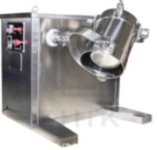
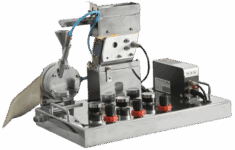
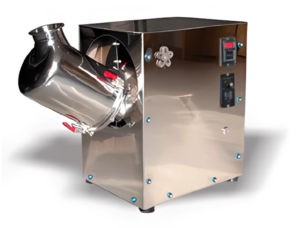
Equipment for electrode material synthesis
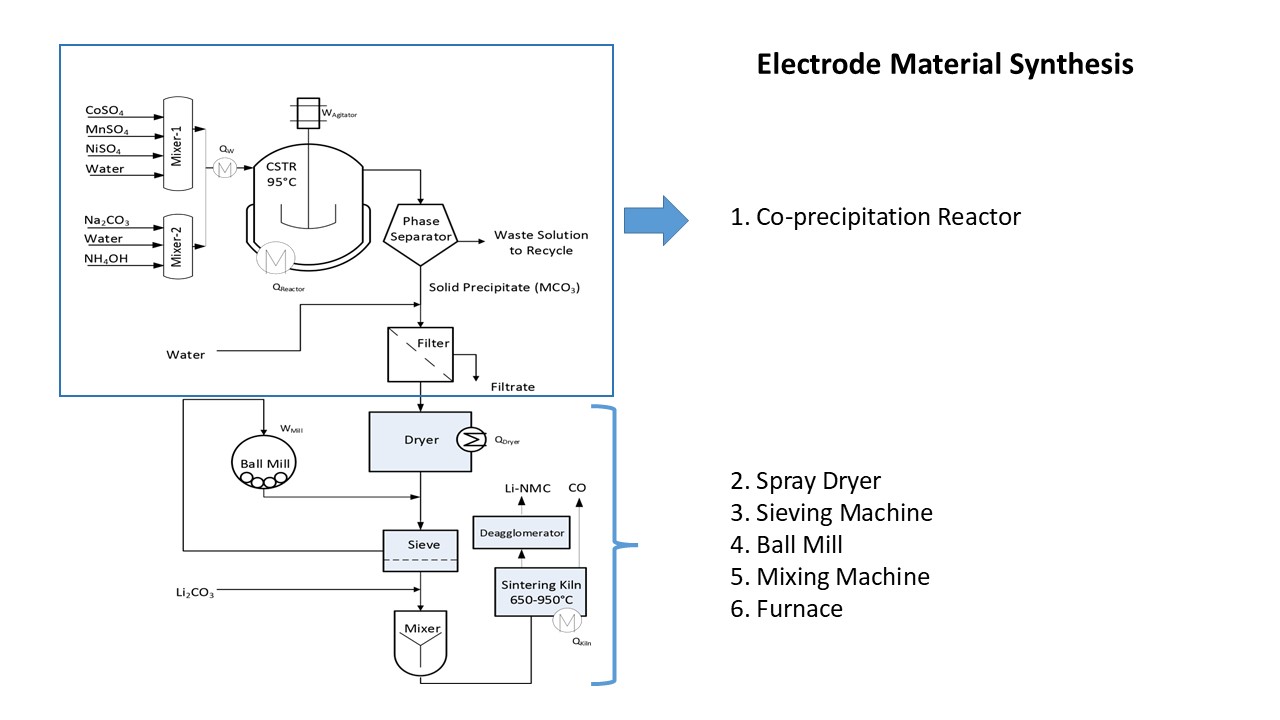
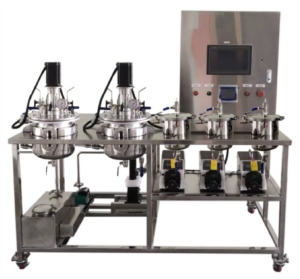
- Co-precipitation Reactor
- Vacuum Filtration Unit
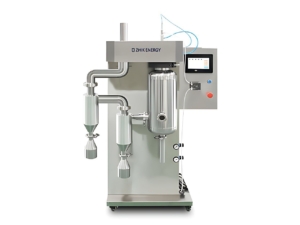
- Spray Drier
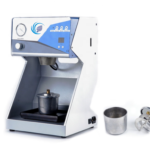
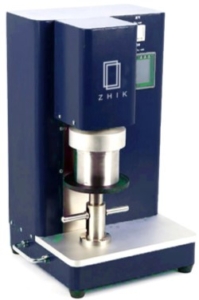
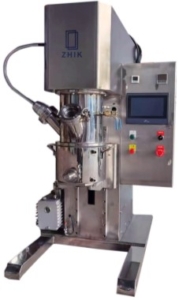
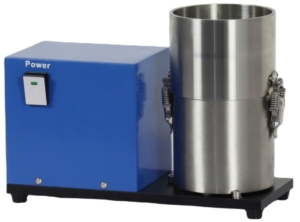
- Dual Motion Mixture
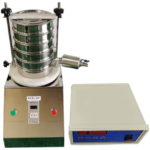
- Ultrasonic Sieving Machine
- Omni Directional Planetary Ball Mill
- Muffle Furnace
FLOW CHART

Equipment for electrode material synthesis
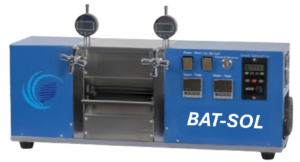
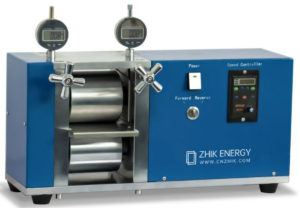
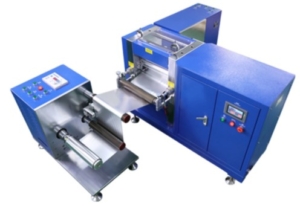
Compress the electrode to a desired thickness/density.

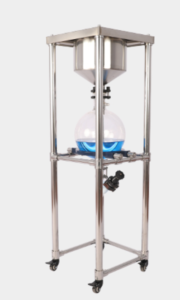
Specification
· List of components: Stainless steel (SS) funnel, glass flask, and SS rack.
· Funnel Material: SS304 Stainless Steel for durability and corrosion resistance.
· Flask capacity: 10L
· Vacuum Valve: Flask with a vacuum valve (pump included).
· User-Friendly Design: Flask designed for easy removal and handling.
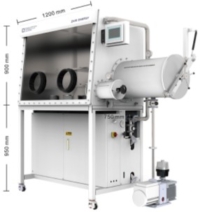
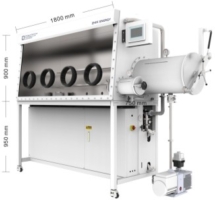
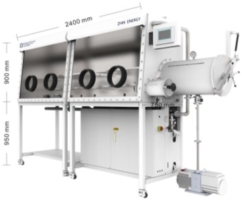
The glove box is a high-performance, high-quality closed-loop working system that automatically absorbs water and oxygen molecules, purifies the working environment, and provides an inert atmosphere of 1ppm O2 and H2O that can meet your specific cleaning requirements. This system is an economical circulation purification system designed to meet customer research and development.
Furnaces
Anode and Cathode Material Synthesis / Drying and Sintering / Battery Recycling
Muffle Furnace / Tube Furnace / Vacuum Furnace / Electric Arc Furnace
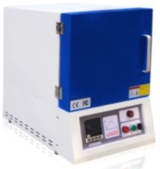
Muffle Furnace
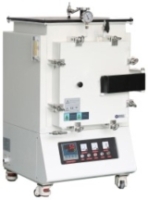
Atmosphere Furnace
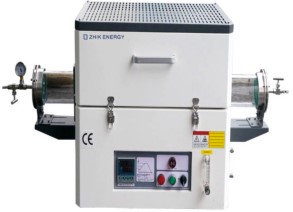
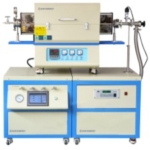
Tube Furnace
Types of Ball Mill
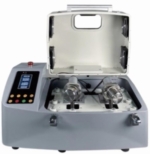
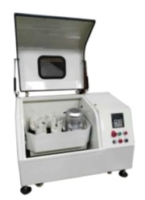
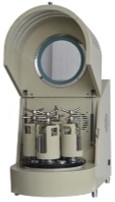
This is an omnidirectional planetary ball mill used as a preparation device for mixing, fine grinding, sample preparation, nanometer material dispersion, new product development and small batch production of high-tech materials. This product is small in size, full in function, high in efficiency and low in noise. It is an ideal equipment for scientific research institutions, universities, and industry laboratories to obtain microparticle research samples (four samples can be obtained at the same time for each experiment). It has a vacuum ball milling tank and can grind samples under vacuum. It has lock clamps for safety.
The omnidirectional planetary ball mill is suitable for wet and dry crushing and refining of hard, medium hardness, brittle and fibrous materials. The sample fineness can be less than 100 nm. It can also be used for grinding solids in suspension, sample mixing and homogenization, and metal alloying, which can achieve ideal and outstanding results.
1. Under the influence of the geometric structure of the grinding medium and the special motion mode of high-frequency and high-intensity collision, shear and friction are generated directly by the grinding medium. During this process, the sample achieves an extremely excellent grinding effect-, with the characteristics of fast processing speed, small, uniform.
2. The material as a whole is far away from the revolution center in a group way. After rotating to a certain angle with the cylinder, it slides in the opposite direction of rotation. The grinding body pushes the powder layer away from the mill and exerts compression, shear and friction on the material.
3. After the material is turned to a certain angle with the grinding cylinder, the pressure on the cylinder wall is equal to zero, and the material is thrown off the cylinder wall, exerting an impact on the material.
4. The material rises along the concentric circle track and falls layer by layer in a circular flow state. It exerts extrusion grinding and friction on the powder.
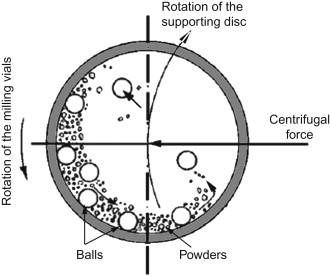
5. The material moves in a circle with the grinding ball and slides relative to it, exerting friction on the powder.
The material at the cylinder wall does not slide and rotate with the grinding cylinder, thus losing the crushing effect, but it can be used to protect the inner wall of the grinding cylinder and reduce wear. The circulation and sliding motion play a major role in fine crushing.
6. Main plate rotation: When the planetary tank body is working, the planetary main plate will rotate continuously 360 degrees or work at any angle, so that the material can fully participate in the grinding. This type is also known as the non-dead angle planetary grinder.
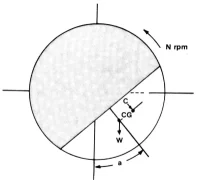
7. The G-Force Calculator: To convert revolutions per minute (RPM) to relative centrifugal force (RCF), or g force, use the following formula: RCF = (RPM)² × 1.118 × 10^(-5)× r. Relative centrifugal force is dependent on the speed of rotation in RPM and the distance of the particles from the center of rotation.
The Force exerted on a sample in a centrifuge is a function of the rotation speed of the centrifuge (RPM) and the radius of the rotor.
Formula :
RCF or G-Force = 0.00001118 x Rotor Radius (cm) x (RPM)²
RCF or G-Force = 0.0000284 x Rotor Radius (inch) x (RPM)²

Mixing Equipment
–
Compress the electrode to a desired thickness/density.