
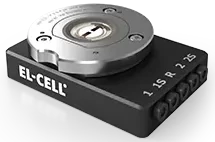
In-Situ Raman Spectroscopy / Light Microscopy of Li ion Battery
- Optical Methods: light microscopy or Raman spectroscopy in reflection mode
- 2 and 3-electrode cell with an optical window
- High cycling stability due to improved sealing concept
- Low-profile design for use with light microscopes
- Dedicated sample holders (side-by-side & face-to-face) for different electrode arrangements are available
- Lid units for different window materials and applications
- Cables / Cableless cell connection via socket
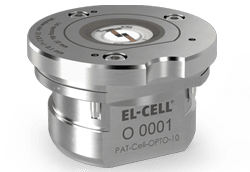
Optical and X-ray characterization in the reflective mode
- Face-to-face arrangement of electrodes
- Adjustable, reproducible and homogeneous mechanical pressure on electrodes
- Electrodes are easily accessible for post-mortem analysis
- Easy and reliable electrolyte filling upon assembly
Optical or Raman Spectroscopy in the reflective mode
- Face-to-face arrangement of electrodes for aqueous electrolytes.
- 2- and 3-electrode cell with optical window for aqueous electrochemistry
- Materials in media contact are gold, PEEK and EPDM
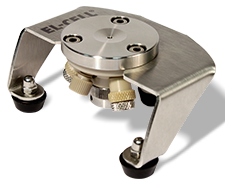
Test Cell: For Aprotic or Aqueous Electrolytes
Features:
- Extremely low loss of light
- The compact long-focus instrument with the unique high aperture
- High-Resolution Automated Raman Spectrograph is in the Imaging mode
- Three pairs of gratings
- Two input and two output ports
- Full computer control
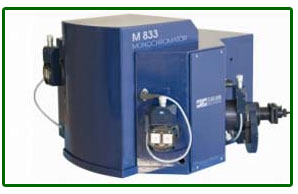
Specifications:
- Spectral Range: Typical 180 nm – 4800 nm (Up to 40 µm)
- F/Number: 1:5.5
- Flat Field: 30 mm x 10 mm
- Difraction Gratings: 70 mm x 70 mm x 10 mm
- Maximum number of filters: 8
- Filter Size: 20 mm
- Light Aperture: 18 mm
Features:
- High aperture ratio, low stray light and perfect line quality
- Two output ports
- Completely automated
- Automatic shutter
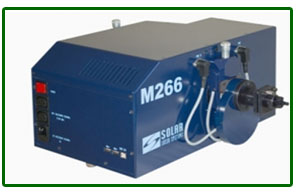
Specifications:
- Spectral Range: Typical 180 nm – 3600 nm (Extended up to 40 µm)
- F/Number: 1:3.8
- Focal Length: 284 mm
- Flat Field: 30 mm x 10 mm
- Gratings: 50 mm x 50 mm x 10 mm
- Maximum number of filters: 8
- Filter Size: 20 mm
- Light Aperture: 18 mm
Features:
- Extremely high aperture ratio
- Low stray light
- Three diffraction gratings
- High degree of automation
- Entrance slits: Automatic and manual adjustment
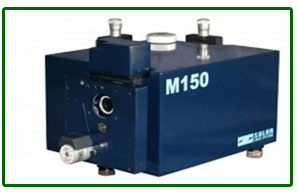
Specifications:
- Spectral Range: Typical 190 nm – 3600 nm (Extended up to 15 µm)
- F/Number: 1:3.6
- Focal Length: 142 mm
- Flat Field: 30 mm x 10 mm
- Difraction Gratings: 40 mm x 40 mm x 10 mm
- Maximum number of filters: 8
- Filter Size: 20 mm
- Light Aperture: 18 mm
Features:
- Double Monochromator for Excellent Stray Light Rejection
- Multifunctional: additive/dual dispersion & non-additive/subtractive dispersion
- Compact & Cost-effective
- Micrometric entrance, intermediate & exit slits
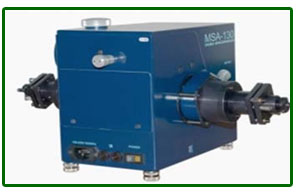
Specifications:
-
- Focal Length: First monochromator, collimating mirror (130 nm), focusing mirror 142 nm
- Focal Length: Second monochromator, collimating mirror (142 nm), focusing mirror 130 nm
- F/Number: 1:4.5
- Difraction Gratings size: 25 mm x 25 mm x 8 mm
Features:
- Extremely High Aperture
- Absence of astigmatism at the output
- Change slits on the fly
- Compact size and low cost
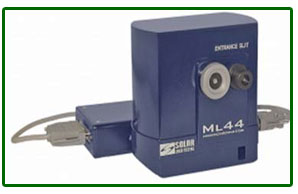
Specifications:
-
- Spectral Range: 190 nm – 1200 nm
- Focal Length: 44.2 mm
- F/Number: 1:2.9
- Difraction Gratings size: 25 mm x 20 mm x 6 mm
- Entrance / Exit Slits (Changeable): 0.02, 0.05, 0.1, 0.25, 0.5, 1.0 (Widths, mm) and 3.0 mm height
- Raman spectrum acquisition and imaging
- Fast 2D scanning
- Bright field microscopic imaging
- Only one laser/filter equipped
- Interchangeable and rotatable VPH grating selections
- Photoluminescence (PL)
- Electroluminescence (EL)
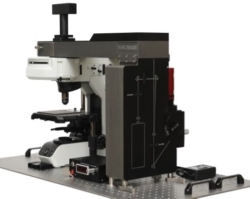
XperRAM S Series: Confocal Raman spectroscopy imaging system
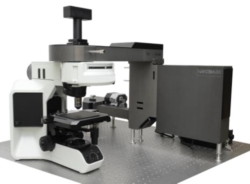
XperRAM M
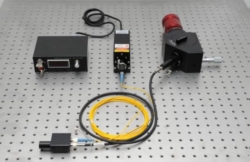
XperRF: High-end confocal Raman Spectroscopy imaging system with a FLIM feature
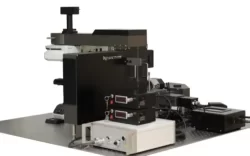
XperRAM C Series: Economical Raman system that offers one laser/filter option
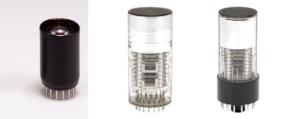
- It receives incident light through the end of the glass bulb.
- Photosensitive areas range from a few dozen square millimetres to several hundred square centimetres.
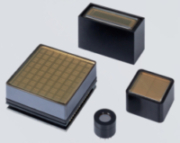
- It is a unique electron multiplier called a metal channel dynode that delivers a high-speed response
- It allows a compact, multi-anode design.
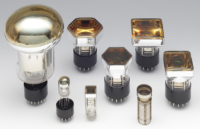
- Designed and developed PMTs to meet specific requirements, environments, and applications
- Available with square or semispherical shapes, high magnetic field immunity
- Ruggedized internal structures are resistant to high temperatures and vibrations
- It receives incident light through the side of the glass bulb
- PMTs are widely used in spectrophotometers and general-purpose photometric systems
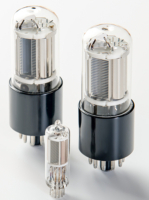
Microchannel plate PMTs (MCP-PMT)
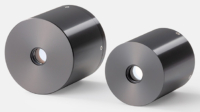
- MCP-PMTs incorporate a microchannel plate in place of conventional discrete dynodes
- These devices offer wide-bandwidth measurements down to the picosecond level
- Low-light-level detection at the photon-counting level
- Gated types are available
Head-on PMT Assemblies
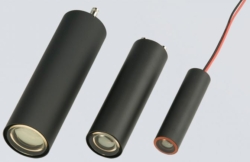
- Photosensitive areas ranging from 10 mm to 127 mm in diameter.
- Option for including HA treatment (conductive layer connected to the cathode)
- A magnetic shield case (Optional)
Metal Package type PMTs
Metal package photomultiplier tubes are available in various shapes and with different numbers of anodes
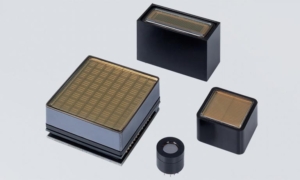
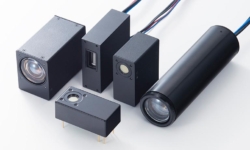
- A photomultiplier tube converts light into electrical signals
- High-voltage power supply circuit
- A voltage divider circuit to distribute the optimum voltage to each dynode
- All components are assembled into a single compact case
- Additional functions such as signal processing, cooling, and circuitry to interface to a PC
Different types of PMT Modules
- Current output modules
- Voltage output modules
- Photon counting head modules
- NIR PMT Unit
- Application-specific PMT module / Peripheral equipment
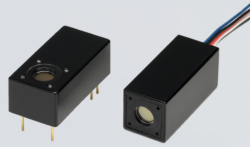
Current output PMT modules
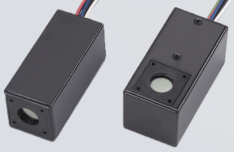
Voltage output PMT module
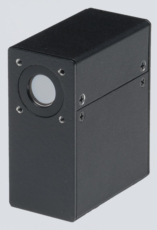
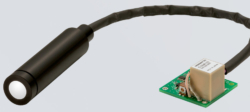
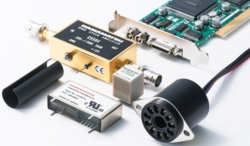
PMT accessories are designed specifically to simplify implementation, including high-voltage power supplies, socket assemblies, amplifier units, and thermoelectric coolers.
- Amplifier units & modules
- Counting units (USB compatible)
- D-type socket assemblies
- DA-type socket assemblies
- DP/DAP-type socket assemblies
- High-voltage power supplies
- Magnetic shield cases
- Photon counting units (BNC compatible)
- Stabilized light sources
- Thermoelectric coolers
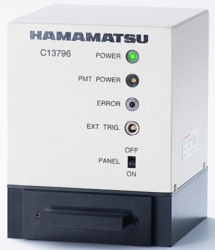
Photon detection units are designed to make low-light measurements at single-photon levels without a time-consuming measurement setup.
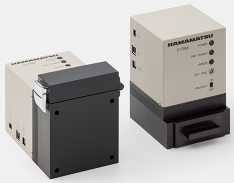
Photon Detection Unit
- Cover a broad spectral range, from near-infrared and ultraviolet wavelengths to high-energy regions.
- Available in metal, ceramic, and plastic packages, as well as module types
- Spectral response range is typically within 200 to 1150 nm.
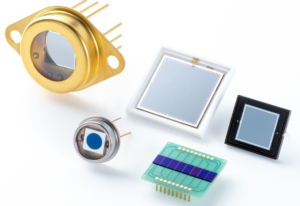
- Si PDs
- Si PD arrays
- Si PD arrays with an amplifier
- InGaAs PDs
- I2C-compatible InGaAs PDs
- InGaAs PD arrays
- PD modules
- Photosensor amplifiers
- Optics modules
- Balanced detectors
- APDs are photodiodes with internal gain produced by the application of a reverse voltage.
- They have a higher signal-to-noise ratio (SNR) than PIN photodiodes, as well as fast time response
- Low dark current, and high sensitivity.
- Spectral response range is typically within 200 to 1150 nm.
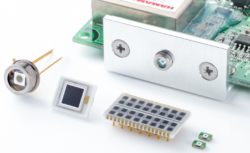
- Si APDs
- Si APD Arrays
- Photosensors with front-end IC
- InGaAs APDs
- APD modules
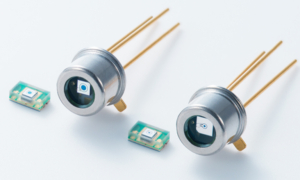
Silicon APDs provide high sensitivity ranging from UV to NIR for low light detection at high speeds.
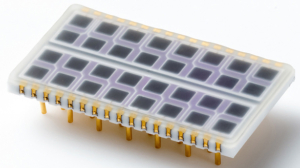
Silicon APD array is a sensor with multiple Si APD arranged in a single package
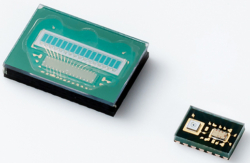
Photosensors with front-end IC
- Integrate a photosensor (photodiode or APD)
- Front-end integrated circuit (IC) that reads the signals from the photosensor
- Suitable for rangefinders
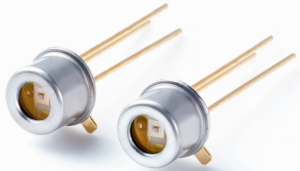
InGaAs APDs provide high near-infrared sensitivity for low light detection at high speeds.
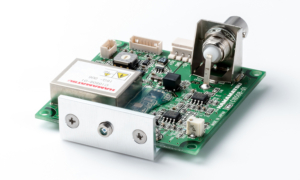
APD modules
- APD with a low-noise amplifier circuit,
- High voltage power supply
- Temperature compensation circuit integrated into a compact solution
Multi-Pixel Photon Counter (MPPC): A photon-counting device called a SiPM,
- Multi-pixelized Geiger mode APD
- Excellent detection ability
- Detect very low-level light
Single photon avalanche diode (SPAD)
- A single pixel photon counter
- Combines a Geiger mode APD and a quenching resistor into one set
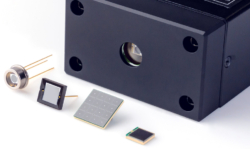
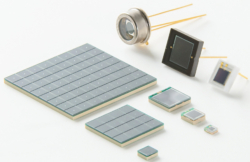
MPPC (SiPMs) / MPPC arrays
Single MPPC (SiPMs) and multi-channel MPPCs
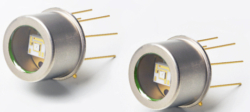
SPADs
SPAD is an element that combines a single photon avalanche diode and a TE-cooler in one package.
MPPC modules
Modules (SiPM modules) that contain an MPPC capable of detecting extremely low-level light.
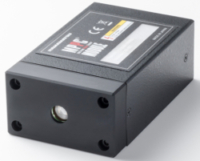
SPAD modules
- SPAD array and module products
- Can integrate these detectors with ASIC
- Applications: LiDAR, optical tomography, quantum computing, and other low-light-level applications.
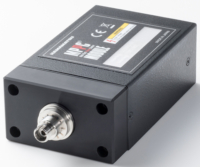
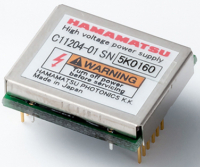
MPPC power supplies & driver circuits
- Built-in temperature compensation function
- Operate in environments with fluctuating temperatures
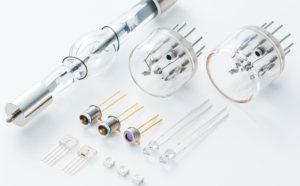
Lamps: High stability and long lifetimes. Light measurement technology is utilized in many applications including chemical analysis
- Xenon & mercury-xenon lamps
- Xenon flash lamps
- Deuterium (D2) Lamps
- Deuterium lamps for photoionization
- Hollow cathode lamp
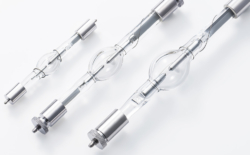
Xenon & mercury-xenon lamps
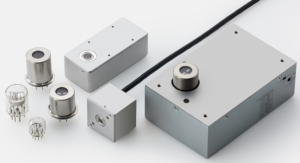
Xenon flash lamps
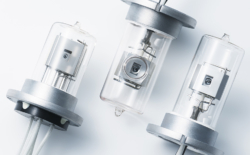
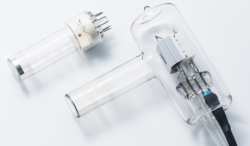
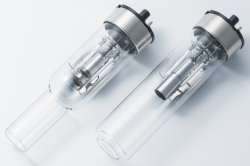
Lamp modules and lamp units are assembled with a matching power supply and other functions making them suitable for a wide range of user applications
- Spot light sources
- VUV light source units
- Compact D2 lamp modules
- Calibrated lamp light source
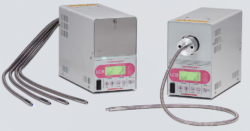
Spot light sources
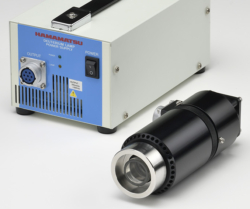
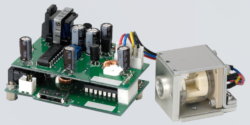 Compact D2 lamp modules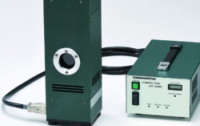
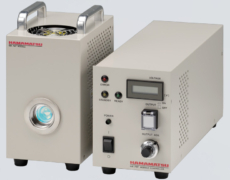
Excimer lamp light sources contribute to surface modification, dry cleaning, oxidative decomposition, TOC measurement, and VOC decomposition. The optimum product can be selected based on the product size and irradiation area.
- Flat Excimer
- Ex-Pen
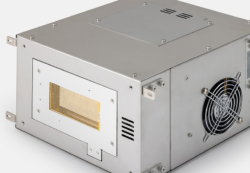
Flat Excimer
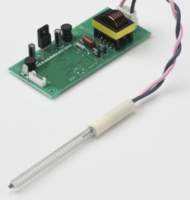
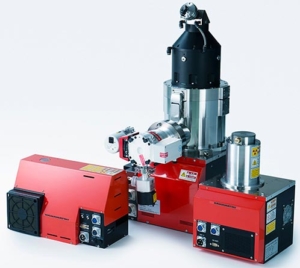
Microfocus X-ray sources specifically developed for 2D and 3D nondestructive testing. A small focal point prevents blurring of X-ray images and delivers a sharp, enlarged image.
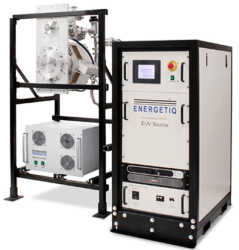
Modular Design for Easy Integration
Uniquely designed EUV light sources minimize heat load and reduce debris, giving you control over peak brightness and peak power in a compact, modular unit.
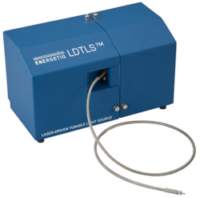
The Laser-Driven Tunable Light Source (LDTLS™) is a compact, fully integrated and highly stable tunable broadband light source based on proven Laser-Driven Light Source (LDLS™) technology.
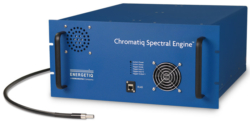
The Chromatiq Spectral Engine™ (CSE) is a sophisticated light source capable of matching real-world lighting conditions, emulating illuminant standards, and creating custom spectra.
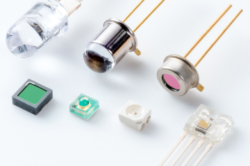
- LEDs range from red to mid-infrared, a variety of wavelengths
- Supports compound semiconductor materials.
- LEDs are mainly used in combination with photosensors
- Strictly controlled assembly and inspection processes ensure high quality and reliability.
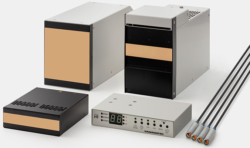
- High output and adopting a proprietary air-cooling method
- For UV printing, UV bonding, UV coating and many other applications
- Product is available from the irradiation area, wavelength, output power and so on.
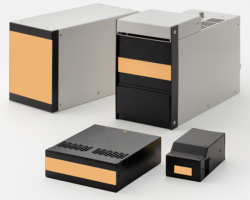
Linear irradiation type UV-LED Units
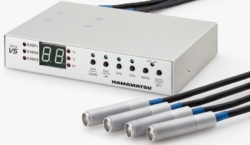
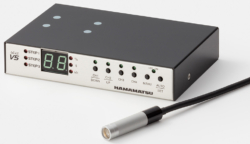

- The high-stability soft X-ray source is assembled with a power supply in a compact module
- Emits soft X-rays (15 kV) that allow inspection of light-element foreign matter and impurities
- Its compact and lightweight design with a wide beam angle enables easier installation
- A plastic plate can be used for shielding instead of lead, which helps reduce the cost of shielding